Every year, sediment and mineral scale build up at the bottom of your water heater tank. On Dallas hard water, this happens faster than average.
The fix: an annual flush.
Why it matters
Sediment at the bottom of a tank:
- Insulates the burner from the water, so the heater runs longer to reach temperature
- Cracks the enamel liner via localized overheating
- Reduces effective tank volume (a 50-gallon tank with an inch of scale is a 45-gallon tank)
- Makes the popping / rumbling noise you may hear on cycle
The result: shorter tank life. On unsoftened Dallas water, an un-flushed tank makes 7–8 years. A properly maintained one makes 12+.
How to flush (DIY version)
- Turn off the tank — gas (set to "pilot") or electric (breaker off)
- Turn off the cold water inlet at the top of the tank
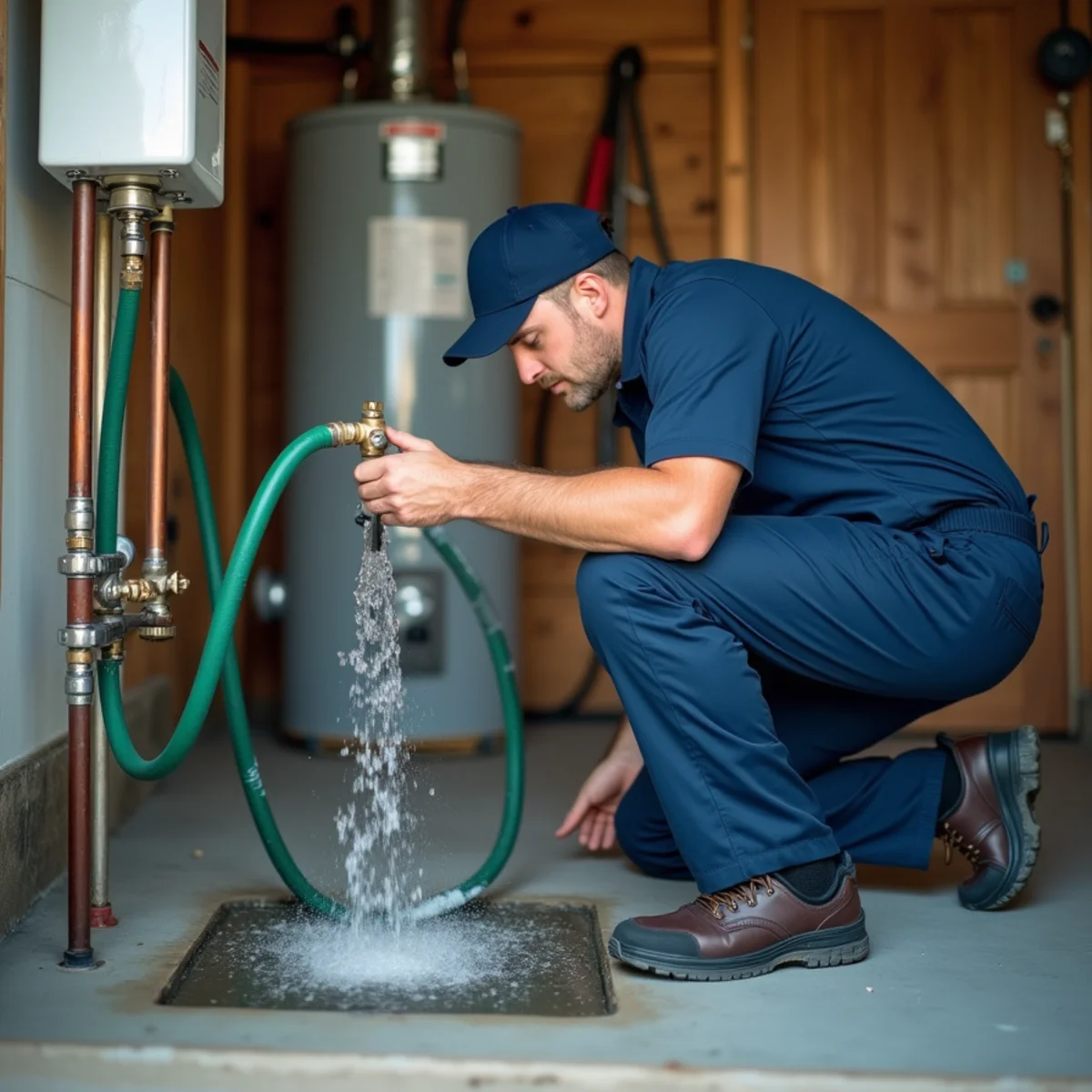
- Attach a garden hose to the drain valve at the bottom
- Run the hose to a driveway or floor drain (water will be very hot)
- Open a hot-water fixture in the house to break vacuum
- Open the drain valve — tank drains for 20–40 minutes
- When empty, close the drain and refill the tank (cold inlet back on)
- Refill fully before restoring heat — running an empty electric element burns it out
Do this annually. Add anode-rod inspection every 3 years.
When to hire it done
Some water heaters have drain valves that will not fully close after decades of sediment. If yours drips after the flush, we swap the drain valve for a stainless brass one.
Also — attic-install heaters need special care to drain without spilling in your attic. We handle attic flushes routinely.
When flushing is NOT worth it
If the tank is 12+ years old and starting to rumble, a flush will help but the tank is on borrowed time. At that point, plan for replacement rather than deep maintenance.
Tankless flushing
Tankless heaters ALSO need flushing — with vinegar or a commercial descaler through the service ports. Manufacturer recommendation is annually; on unsoftened Dallas water, we recommend every 6 months. Skipping this on a tankless voids the warranty on most brands.
The softener + flush combo
The best defense against tank scale is a whole-home softener. Combined with an annual flush, your tank lasts 12+ years easily. Without a softener, even a religious flush schedule struggles to get past year 10.
Signs your tank needs a flush now
- Popping or rumbling on cycle
- Hot water runs out faster than it used to
- Metallic taste in hot water
- Discolored water when you drain a bit off the drain valve
If it has been more than a year, do it now. If it has been more than 3 years, book a professional flush — some drain valves are stuck by then.
Belt Line Plumbing expert insight
This guide reflects what our licensed Texas RMP plumbers see on real prevention calls across Addison, Farmers Branch, Carrollton, and the greater Dallas North Tollway corridor. Belt Line Plumbing Co. has served the Addison area since 2007, with 412+ five-star reviews from north Dallas homeowners, property managers, and Belt Line Restaurant Row operators.
Local factors that affect the advice above: North Texas expansive clay soil drives most residential slab and sewer failures; Dallas Water Utilities supply water at 8–11 grains of hardness per gallon shortens every water heater and tankless system without a softener; and the February 2021 Winter Storm Uri freeze exposed attic supply lines across almost every 1970s–2000s Addison home. If your situation includes any of these local realities, factor them in before deciding between repair, replacement, or a preventive upgrade.