February 2021. Six degrees. No power. And every attic supply line in a Texas-built home doing something it was never designed for — sitting in below-freezing temperatures for four days straight.
We were on-site continuously for three weeks after Uri. What we learned about how Addison homes fail in a hard freeze is not theoretical — it is a punch-list.
Where Addison homes actually burst
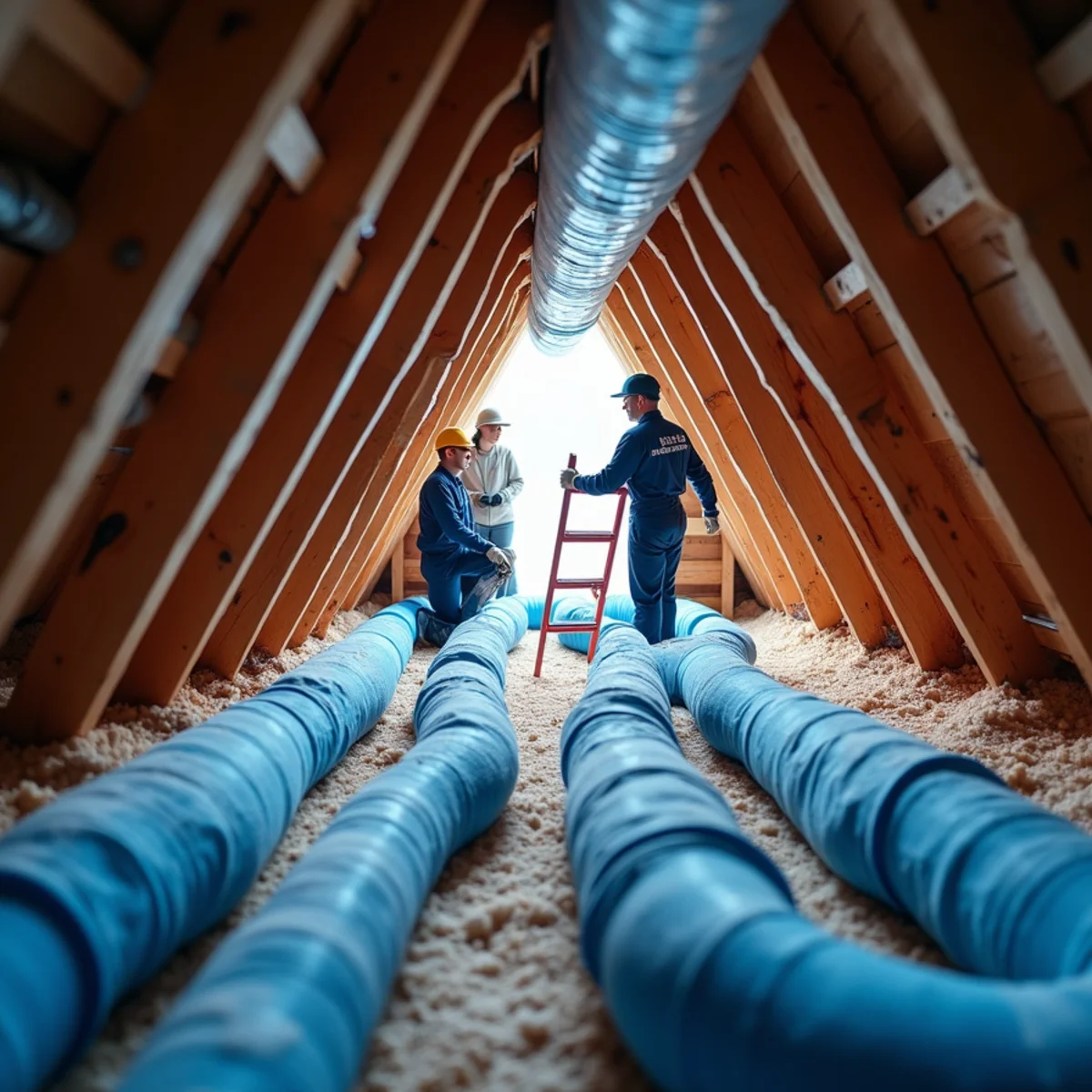
Not the yard lines. Not usually the wall lines. The attic supply lines against exterior walls. In Texas-built homes, water runs through the attic to feed second-floor fixtures. The insulation stops on the interior side; the pipes sit exposed in the attic air. When outside temperature holds below freezing for 30+ hours, the attic gets there too.
The second most common failure: hose bibs and their interior stub-ups. Non-frost-free hose bibs freeze at the connection, and the split travels back into the wall. You do not see it until the thaw.
The freeze-proofing playbook
Do these five things before the next hard freeze:
- Wrap attic supply lines with pipe insulation. Every horizontal run in the attic. $30 in materials, one Saturday afternoon.
- Insulate the attic hatch. A big cold hole above your ceiling changes everything else.
- Replace standard hose bibs with frost-free. They isolate at the interior side of the wall.
- Learn your main shutoff. In most Addison homes it is at the meter in the front yard. You need a shutoff key or long screwdriver.
- Drip fixtures on the coldest fixtures during freezes. Bathroom on the exterior wall, kitchen sink, laundry hookups. Cold water only. A pencil-lead trickle.
During the freeze — real-time steps
Open cabinet doors under all sinks on exterior walls so house heat reaches the pipes. Keep the thermostat 68+ overnight. If you leave town, do not just turn heat down — shut the main and drain the lines.
If a pipe freezes, do not thaw it with an open flame. Space heater or hair dryer, and open the fixture so melting water has somewhere to go. Then call us to check for cracks before pressure comes back.
After a burst — the first 5 minutes
Shut the main. Turn off the water heater breaker (if electric) or gas (if gas). Call emergency plumbing and start pulling towels on the biggest wet spots.
Why Addison in particular
Addison's 1970s Belt Line townhomes and Vitruvian-area apartments have a lot of attic exposure and older insulation. Even newer builds around Midway and Beltway are Texas-spec — they were not built for a Nebraska winter. Uri was not "extreme weather"; it was "extreme weather for Texas construction."
The upgrade path
If your home was built pre-2010 and still has original insulation, add batts to the attic sides against exterior walls. If you have had a freeze burst before, a full attic PEX repipe is worth quoting — PEX handles ice expansion far better than copper.
Every Belt Line Plumbing truck now carries pipe insulation, heat wraps, and a stack of PEX splices year-round. Uri will happen again. Prep this year.
Belt Line Plumbing expert insight
This guide reflects what our licensed Texas RMP plumbers see on real emergency calls across Addison, Farmers Branch, Carrollton, and the greater Dallas North Tollway corridor. Belt Line Plumbing Co. has served the Addison area since 2007, with 412+ five-star reviews from north Dallas homeowners, property managers, and Belt Line Restaurant Row operators.
Local factors that affect the advice above: North Texas expansive clay soil drives most residential slab and sewer failures; Dallas Water Utilities supply water at 8–11 grains of hardness per gallon shortens every water heater and tankless system without a softener; and the February 2021 Winter Storm Uri freeze exposed attic supply lines across almost every 1970s–2000s Addison home. If your situation includes any of these local realities, factor them in before deciding between repair, replacement, or a preventive upgrade.