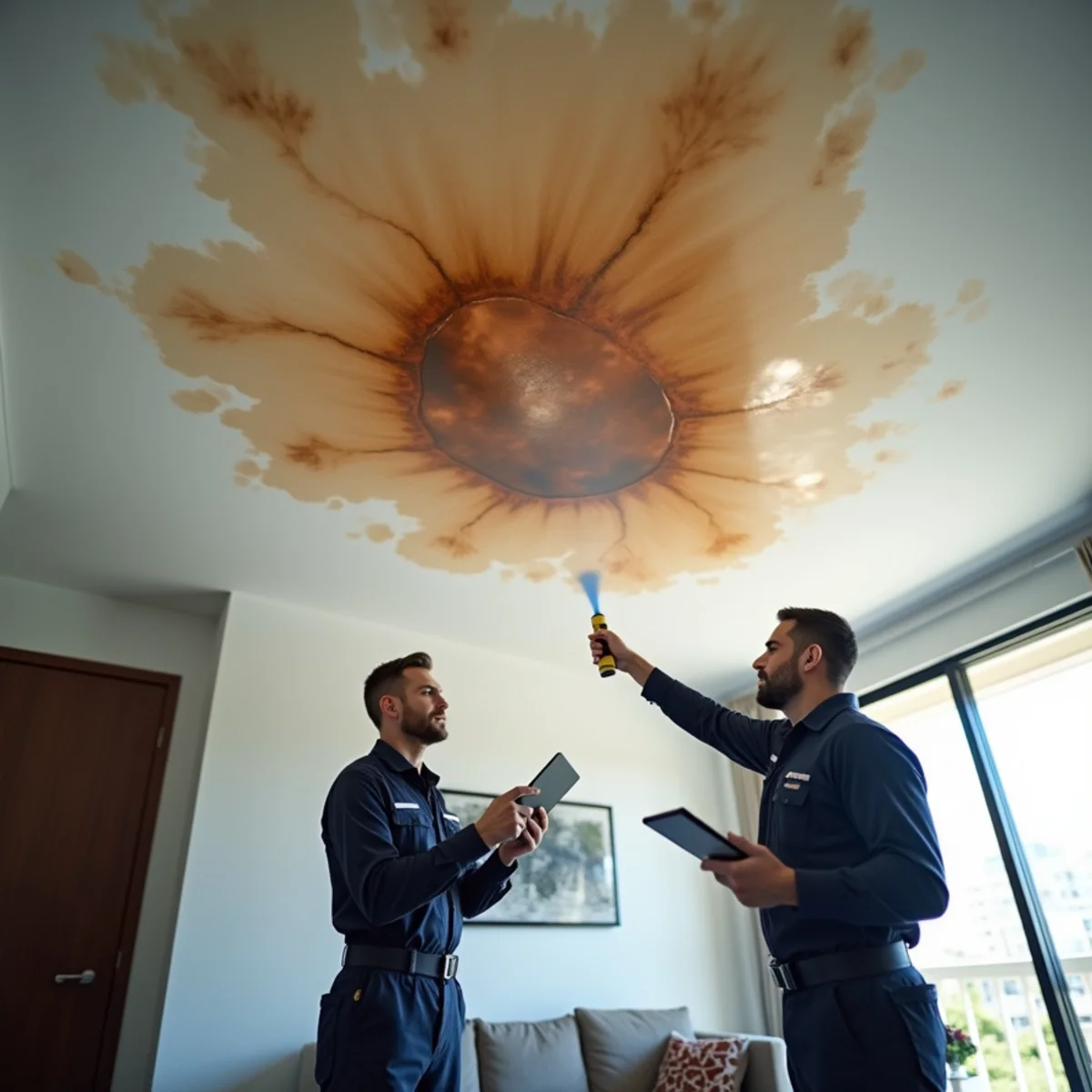
A ceiling stain appears in your Addison condo. Your kitchen sink starts leaking under the cabinet. Half of the drywall in the primary closet is wet. Whose problem is it?
The answer is not "yours." The answer is "read the declaration."
Two models of Texas condo ownership
Most Texas condo declarations follow one of two frameworks:
1. "Bare walls" model
You own everything from the interior drywall inward — including fixtures, cabinets, interior plumbing branches, and finishes. The HOA owns the building envelope, structural framing, exterior walls, and vertical common stacks that serve multiple units.
Under this model, if the leak is inside your walls or under your sink, it is yours. If it is in a shared vertical stack (main drain, main supply riser), it is the HOA.
2. "All-in" / "original construction" model
The HOA is responsible for the original bathroom fixtures, cabinets, plumbing, and interior finishes as originally built. You are responsible for upgrades and improvements. This is more common in older, higher-end complexes.
Under this model, if the leak came from an original builder-installed fixture, HOA. If it came from the granite countertop and imported faucet you upgraded, you.
The pipe classes
Regardless of model, most declarations distinguish:
- Supply / drain branches serving one unit — usually the unit owner
- Vertical common stacks / risers serving many units — usually the HOA
- The pipe between the main and your specific fixture — the answer depends on which side of the "meets" language your declaration uses
How to read your declaration
Look for these sections:
- "Definition of Unit" (Article II usually)
- "Common Elements" and "Limited Common Elements"
- "Maintenance Responsibilities"
The "Limited Common Elements" section is the gray zone. Balconies, front doors, and unit-specific plumbing branches often live here — HOA owns, but the unit owner benefits.
The practical playbook
When water damage shows up in your condo:
- Stop the water. Find your unit shutoff or call the PM for master
- Call a plumber (that is us) to locate the failure exactly
- Compare the failure location against your declaration
- Notify HOA in writing immediately if it looks like their side
- File your HO-6 claim regardless — your carrier may subrogate against the HOA later
Insurance mechanics
Your HO-6 unit-owner policy covers your contents and interior finishes. The HOA master policy covers the building shell and common areas. Both may pay a portion of the same loss. And both have deductibles — the HOA may charge back their deductible as a special assessment.
We document every condo leak with photos, moisture readings, and a written failure-location report so both adjusters have what they need.
Addison-specific — the buildings we know
We work with property managers across Addison Circle, Vitruvian, Village on the Parkway, and other DFW multi-family. If your unit is in one of these, we know the stack maps and the master shutoff locations. Ask when you call.
Belt Line Plumbing expert insight
This guide reflects what our licensed Texas RMP plumbers see on real cost & insurance calls across Addison, Farmers Branch, Carrollton, and the greater Dallas North Tollway corridor. Belt Line Plumbing Co. has served the Addison area since 2007, with 412+ five-star reviews from north Dallas homeowners, property managers, and Belt Line Restaurant Row operators.
Local factors that affect the advice above: North Texas expansive clay soil drives most residential slab and sewer failures; Dallas Water Utilities supply water at 8–11 grains of hardness per gallon shortens every water heater and tankless system without a softener; and the February 2021 Winter Storm Uri freeze exposed attic supply lines across almost every 1970s–2000s Addison home. If your situation includes any of these local realities, factor them in before deciding between repair, replacement, or a preventive upgrade.