North Texas sits on the Eagle Ford / Woodbine formation — expansive clay soils that swell dramatically when wet and shrink when dry. That constant movement is the #1 cause of both foundation and slab-plumbing failures in Dallas County.
Addison, Farmers Branch, and the Belt Line townhome belt are ground zero.
The mechanism
When it rains, clay under your slab absorbs water and expands upward. When summer bakes it dry, it contracts and pulls down. This cycle happens every year, sometimes multiple times a year during our wet-dry pattern.
Copper pipes running under the slab do not move with the clay. Instead, they get abraded and stressed at every joint and support point. Eventually a pinhole forms — usually in the hot-water line, because heat + movement + hard water accelerates the process.
Why Addison gets hit hard
- Age of housing stock — Addison's 1970s Belt Line townhome belt is peak slab-leak age
- Copper installation era — pre-1990s copper under slab is the highest-risk material
- Water hardness — Dallas Water Utilities is very hard water, which layers scale inside pipes and creates more surface friction with movement
- Older watering habits — irrigation practices that saturate clay in summer accelerate movement
The warning signs — again
- Warm spot on tile or wood floor
- Water bill up with no lifestyle change
- Sound of running water when everything is off
- Damp carpet or baseboards on an interior wall
- Foundation cracking + drywall cracking on the same wall as a plumbing chase
- Mildew smell from a slab-level cabinet
Three repair paths
- Spot break-in — Chop the concrete over the exact leak, repair, patch. Cheapest, disruptive.
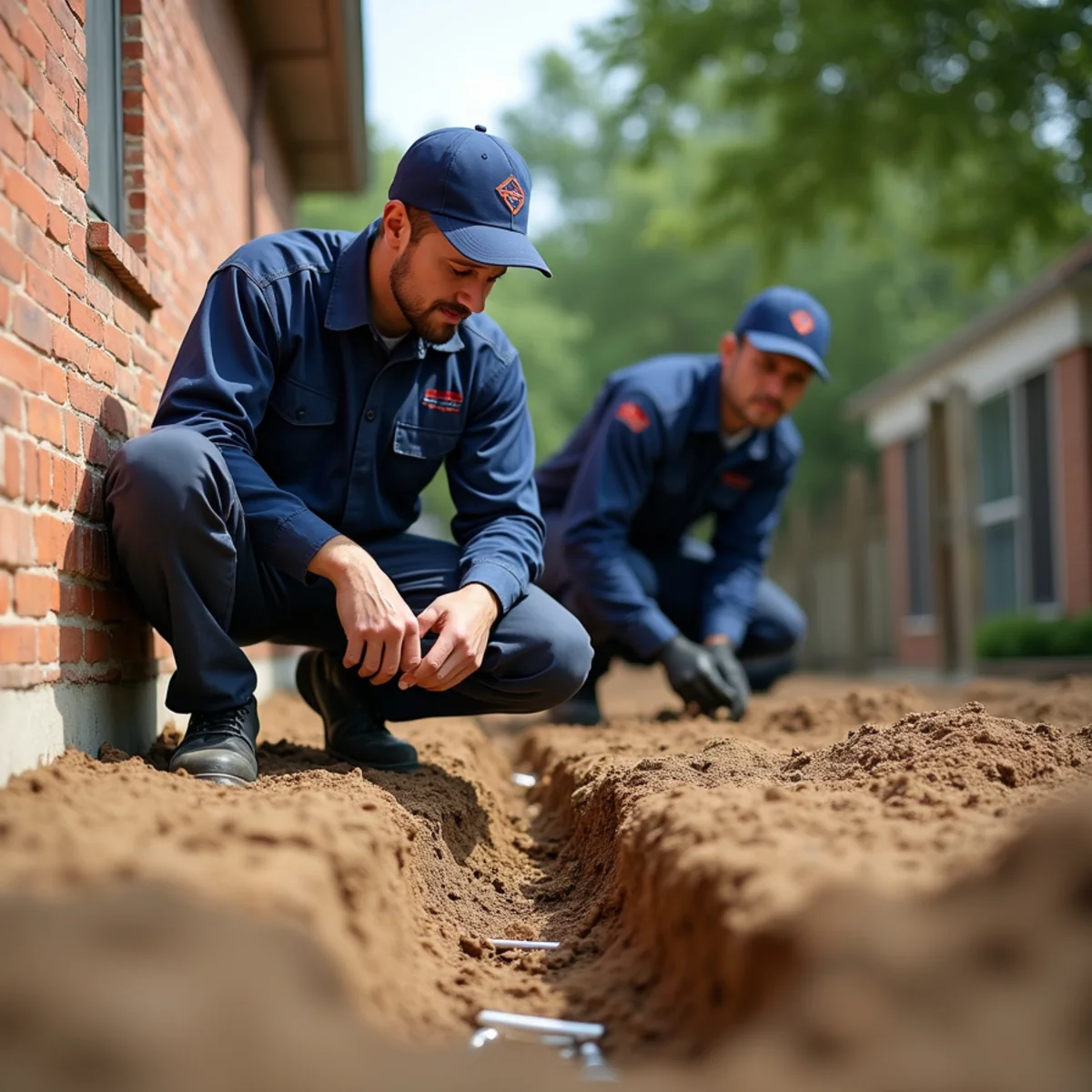
- Tunnel under — Excavate outside the foundation and tunnel horizontally to the leak. Preserves finished floors. Longer, more expensive.
- Overhead reroute — Abandon the failed line entirely. Run new PEX through the attic to that fixture. Often the best choice on repipe-age homes.
For a home over 30 years old with its second or third slab leak, full overhead repiping is almost always cheaper long-term than fixing one leak at a time.
What homeowners can do
- Consistent moisture around the foundation — Drip lines around the slab perimeter reduce the wet/dry extreme
- Deal with irrigation properly — Do not overwater or under-water; consistency matters more than volume
- Get a soaker hose in dry summers — Especially in a drought stretch, keeping the soil edge slightly moist reduces heave
- Watch water bills — First indicator of a slab leak, often before any visible damage
When to call
If you have any of the warning signs above, do not wait. Every day of an active slab leak adds to flooring damage and mold risk. Electronic leak detection locates the leak precisely, then you get three real repair options in writing.
We handle 6-10 slab leaks a month across Farmers Branch, Addison, and Carrollton. This is our home territory.
Belt Line Plumbing expert insight
This guide reflects what our licensed Texas RMP plumbers see on real local-specific calls across Addison, Farmers Branch, Carrollton, and the greater Dallas North Tollway corridor. Belt Line Plumbing Co. has served the Addison area since 2007, with 412+ five-star reviews from north Dallas homeowners, property managers, and Belt Line Restaurant Row operators.
Local factors that affect the advice above: North Texas expansive clay soil drives most residential slab and sewer failures; Dallas Water Utilities supply water at 8–11 grains of hardness per gallon shortens every water heater and tankless system without a softener; and the February 2021 Winter Storm Uri freeze exposed attic supply lines across almost every 1970s–2000s Addison home. If your situation includes any of these local realities, factor them in before deciding between repair, replacement, or a preventive upgrade.